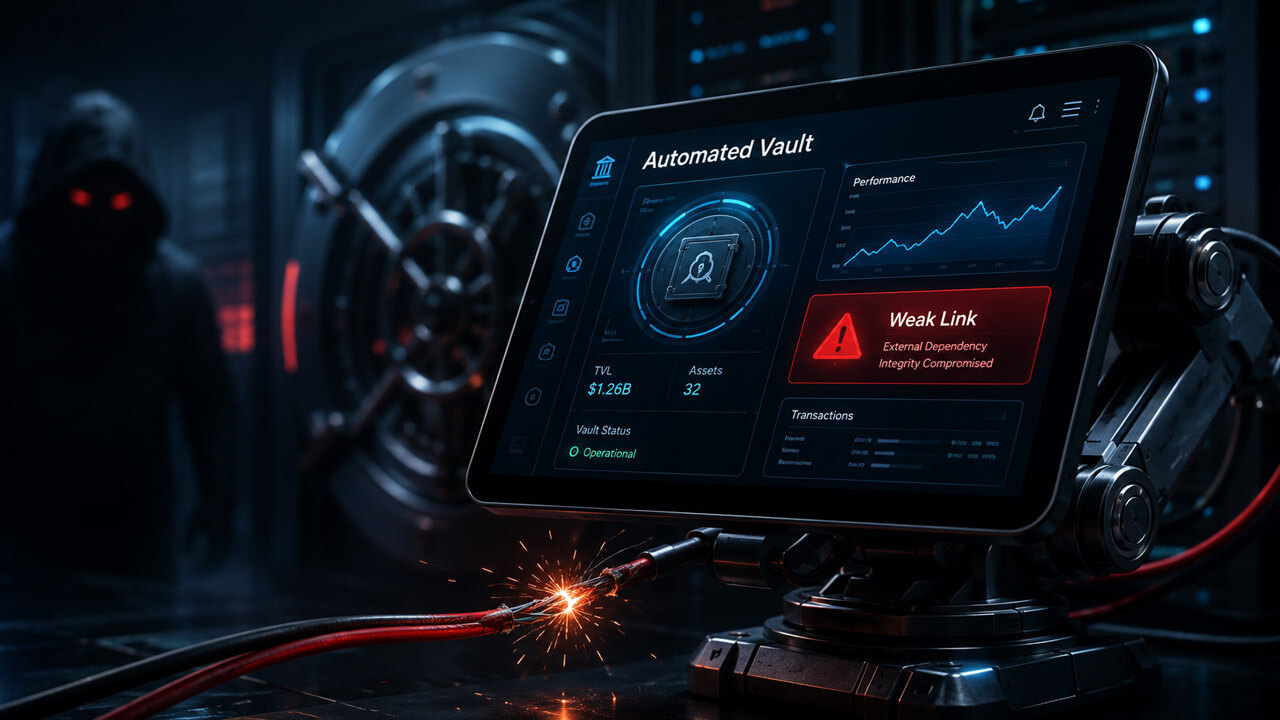
The July 6 exploit of Summer.fi's Lazy Summer Protocol — draining an estimated $6 million — is not just another DeFi hack. It is a structural signal: when AI-driven keeper agents sit above smart contract execution, automation itself becomes the attack surface, and users surrender more control than they realize.
Blockaid's real-time detection system flagged the exploit as it unfolded, linking the exploiter address, the exploit contract, and the affected Lazy Summer vault contracts on Etherscan. The transaction timestamp — 05:17:59 UTC on July 6 — confirms this was a live, on-chain event, not a theoretical vulnerability. Summer.fi confirmed the incident and activated protocol guardians to pause all vaults across Lazy Summer. The root cause and final loss figure remain under investigation pending a full postmortem.
To understand why this incident matters beyond the dollar figure, you need to understand how Lazy Summer's contract stack is designed. Summer.fi markets Lazy Vaults as a "set-and-forget" DeFi yield product — users deposit, and automation handles the rest. That convenience rests on a multi-layer contract system:
Each layer introduces a trust assumption. A depositor is not merely trusting a single smart contract — they are trusting share accounting, strategy execution logic, keeper agent behavior, governance parameter integrity, and emergency pause controls to function correctly simultaneously, without requiring any per-transaction user approval. When one layer fails or is exploited, the entire abstraction collapses.
The Keeper AI Agents are the most consequential layer in this architecture. These agents operate above smart contracts in the execution order: they decide when and how to reallocate capital across ARKs, governed by parameters set in FleetCommander and protocol governance. This is fundamentally different from a static yield vault where a fixed strategy is encoded in an audited contract.
"The more invisible the yield machinery becomes, the more important it is for protocols to show where automation stops, and user exposure begins." — CryptoSlate analysis on Q2 DeFi hack losses reaching $780.3M
When AI agents sit above smart contract execution, the security perimeter expands beyond what traditional audits cover. Audits assess contract code at a point in time. Keeper agents operate dynamically, responding to market conditions and protocol state. If the agent's decision logic, permission model, or the interfaces it calls are exploitable, no smart contract audit will catch it.
This incident does not exist in isolation. CryptoSlate's Q2 2026 analysis documented $780.3 million in known DeFi hack losses across the quarter — a figure that reframes yield as having an embedded exploit premium. The Summer.fi case is a more explicit version of that problem because the automation layer was specifically what exposed users, not a single vulnerable contract.
For DeFi protocol researchers and Web3 builders, the relevant question is not whether automated vaults are viable — they clearly serve a real market demand. The question is how to make the automation layer legible to depositors without degrading the user experience that makes these products attractive in the first place. Disclosures about keeper constraints, governance parameter ranges, and emergency controls need to be first-class protocol documentation, not buried in technical docs.
Summer.fi's forthcoming incident review will determine whether this exploit is contained or carries structural implications for automated vault design. Two outcomes shape the interpretation:
Summer.fi's Immunefi bug bounty and prior audits remain relevant context — they represent a serious security posture. But they also underscore the gap: the exploit happened anyway. For builders designing the next generation of automated yield protocols, the Summer.fi incident is a live case study in why AI-layer risk needs dedicated threat modeling, not just smart contract audits. The protocols that build this rigorously will define the floor for delegated DeFi yield security.
Keywords: SummerFi, DeFi exploit, AI automation, Lazy Summer Protocol, keeper agents, DeFi security, Web3, yield vaults, Blockaid, smart contract risk
Source: CryptoSlate