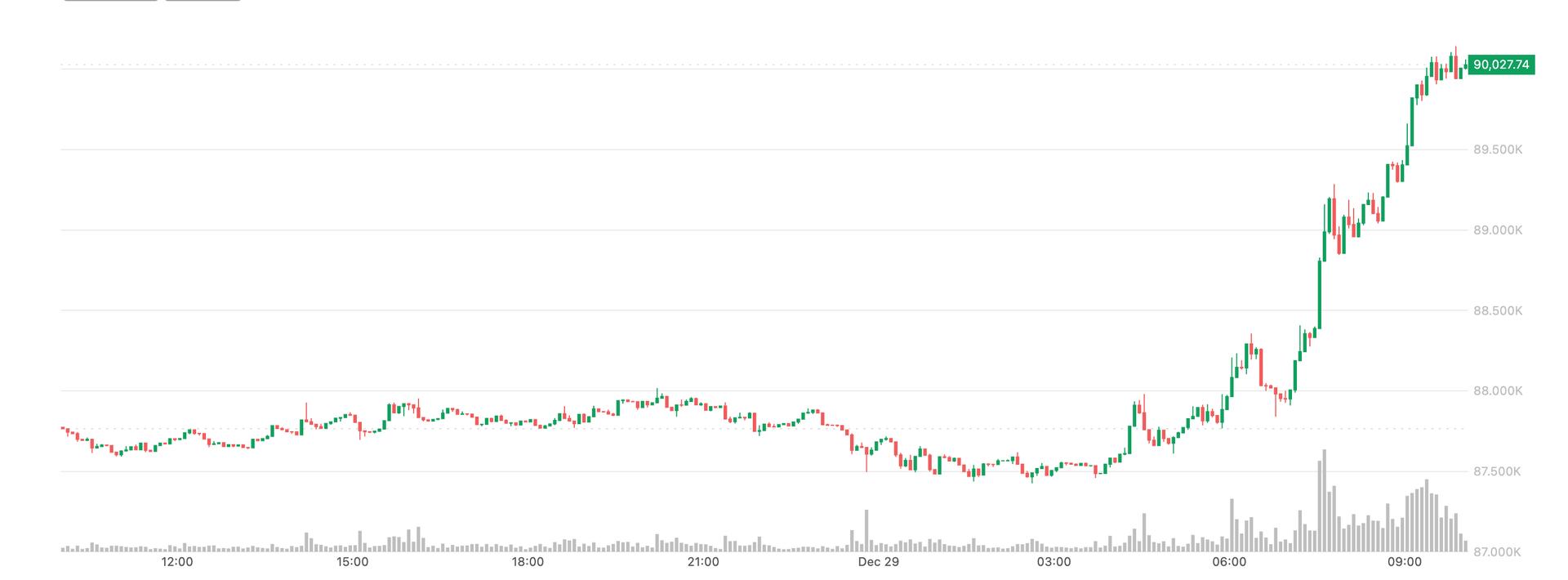
Bitcoin crossing $90,000 coincided with oil price increases driven by the collapse of Russia-Ukraine ceasefire negotiations — a macro correlation that analysts have tracked but rarely seen as cleanly as in this instance. Risk assets typically fall when geopolitical tensions escalate; Bitcoin's simultaneous rise with oil suggests a different correlation structure is emerging: BTC as a store of value that benefits from the same supply disruption fears that lift energy prices, rather than moving inversely with risk appetite.
The Russia-Ukraine peace process, which had generated optimism in late 2024, deteriorated following new Russian attacks on Ukrainian energy infrastructure. Oil markets responded with immediate upward pressure as traders priced in sustained conflict risk to energy supply routes. Gold also rallied — the traditional geopolitical hedge performing as expected.
Bitcoin's rally in the same session was smaller than oil's or gold's in percentage terms, but its directional alignment — moving with, not against, traditional safe-haven assets — is what attracted analytical attention. Prior to 2024, BTC's correlation with risk assets like equities was often positive during geopolitical stress, as risk-off sentiment simultaneously pushed investors to sell both stocks and crypto. The $90,000 level represents a market cap that may be changing Bitcoin's correlation regime.
Asset correlation structures change with market capitalization because the investor base changes. Bitcoin at $90,000 represents approximately $1.8 trillion in market cap — comparable to gold's market cap at roughly $13 trillion when weighted by investment-grade gold holdings. At this scale, institutional investors holding BTC for portfolio diversification purposes are significant enough to determine correlation structure.
"Retail traders correlate BTC with crypto sentiment. Institutional investors correlate it with their portfolio positioning. As institutional ownership grows, BTC's correlation shifts from crypto-sentiment to portfolio-allocation dynamics."
Bitcoin's growing macro-asset status has significant implications for DeFi. When BTC functions as a portfolio hedge rather than a speculative asset, collateral that uses BTC — WBTC on Aave, BTC-backed stablecoins, sBTC on Stacks — inherits some of that hedge value. DeFi protocols that integrate BTC collateral become partially correlated with macro safe-haven flows rather than purely with crypto market sentiment.
The oil-Bitcoin correlation during the Ukraine escalation is one data point, not a definitive regime change. But institutional ownership growth, ETF inflows, and corporate treasury adoption are structural forces that make BTC's correlation with traditional macro assets more plausible at $90,000 than it was at $20,000. For DeFi protocols designing collateral systems, understanding BTC's evolving macro role is increasingly relevant to risk modeling. A collateral asset that moves with gold during geopolitical stress is a fundamentally different risk input than one that moves with meme coins.
Keywords: Bitcoin $90000, oil price crypto, Russia Ukraine crypto, macro crypto correlation, Bitcoin price, geopolitical crypto
Source: CoinDesk