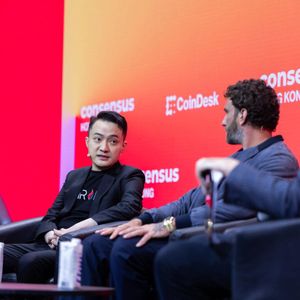
World Liberty Financial's threat of legal action against Justin Sun — who publicly accused the Trump-backed DeFi project of deceptive deal structures — is a governance conflict with implications beyond the specific parties. WLF is one of the highest-profile DeFi protocol launches in terms of political connection, and the Sun dispute exposes the governance weaknesses inherent in protocols where large token holders have both financial interests and public platforms to weaponize against projects they disagree with.
Justin Sun's public statements claimed that World Liberty Financial approached TRON and HTX for promotional partnerships with terms that changed materially between initial discussion and final documentation. Sun characterized the discrepancy as "deceptive DeFi deals" — using language that implied intentional misrepresentation rather than negotiation disagreement.
WLF's response: that it has contracts and documentation supporting the original terms, and that Sun's public statements constitute defamatory claims that damage WLF's reputation with potential investors and partners. The legal threat is both a response to reputational damage and a deterrent against further public criticism from Sun, who has significant influence over TRON's ecosystem and its capital flows.
Sun holds a significant WLFI token position from his $30 million investment. As a large token holder, he has governance rights within the WLF protocol. The public dispute creates a situation where a major governance participant is simultaneously threatening litigation against the protocol's management team — a conflict that most DeFi governance frameworks do not have procedures to address.
"DeFi governance frameworks address token weighted voting, quorum requirements, and proposal processes. They do not address what happens when a governance participant with 15% token weight is also suing the team. It's an organizational failure mode that doesn't exist in traditional corporate governance because shareholders can't simultaneously be governance participants and public adversaries to management."
The WLF-Sun dispute is a preview of governance challenges that will become more common as DeFi protocols attract large capital from actors with independent public profiles and conflicting interests. A hedge fund holding a large governance token position can quietly vote against management proposals. A public figure like Sun can simultaneously vote against proposals, publicly attack the protocol's reputation, and threaten litigation — creating a multidimensional governance attack that smart contract governance mechanisms cannot contain.
DeFi protocol designers building governance systems for large-capital projects need to consider adversarial large-holder scenarios that go beyond simple majority attacks. The WLF case shows that a large holder's damage potential is not limited to on-chain governance votes — it extends to off-chain reputation attacks, litigation threats, and withdrawal of ecosystem cooperation. Governance frameworks that cannot contain this kind of multidimensional adversarial holder behavior will repeatedly generate disputes like the WLF-Sun conflict, regardless of how well the on-chain governance mechanics are designed.
Keywords: Markets|Trump|Donald Trump|Tron|News
Source: CoinDesk